
Yucatán
Mexican state on the Yucatán Peninsula, heartland of Maya civilization.
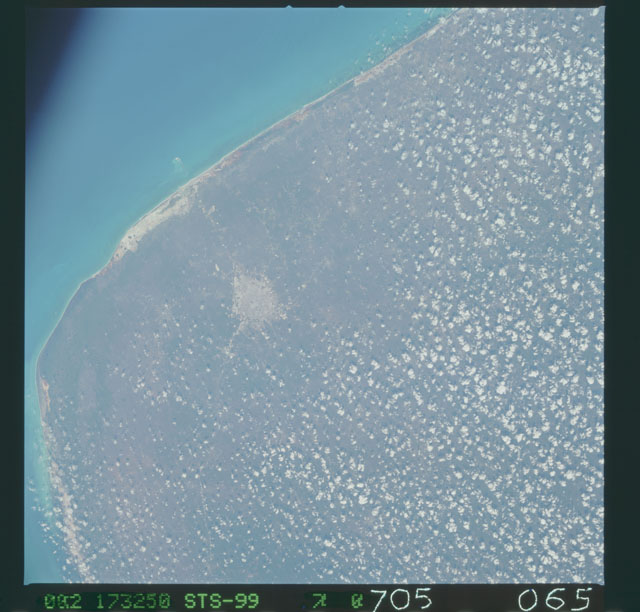
Yucatán—officially the Free and Sovereign State of Yucatán—is one of Mexico’s 31 states, which together with Mexico City make up the country’s 32 federal entities. It sits on the northern portion of the Yucatán Peninsula, with the Gulf of Mexico to its north, Campeche to its southwest, and Quintana Roo to its southeast. The state is divided into 106 municipalities, and its capital is Mérida.
Long before the Spanish arrived, this peninsula was a vital center for the Maya civilization, which flourished here. The Maya built the cities of Chichen Itza, Izamal, Motul, Mayapan, Ek’ Balam, and Ichkanzihóo (now Mérida). The region was originally called Mayab in the Yucatec Maya language, meaning “flat,” a word that also gave rise to “Maya.” The name “Yucatán” came from early Spanish explorers, though its origin is debated. One story says the Spanish heard the Maya phrase *uh yu ka t’ann* (“hear how they talk”) and misunderstood it as a place name. Another claims the Maya answered questions with *ma’anaatik ka t’ann* (“I do not understand you”), which the Spaniards corrupted to “Yucatán.” A third explanation, from Bernal Díaz del Castillo, holds that *Yucatá* means “land of yucas,” a plant the Maya cultivated for food.
Human presence in the area dates back to the late Pleistocene, around 10,000–12,000 years ago, based on finds in the Loltún caves and Tulum caverns. The first Maya arrived from the Petén region (now northern Guatemala) around 250 CE, settling near modern Bacalar, Quintana Roo. By 525, the Chanés—a Maya group predating the Itza—had moved east, founding Chichén Itzá, Izamal, Motul, Ek’ Balam, Ichcaanzihó (today’s Mérida), and Champotón. Later, the Tutul Xiúes, of Toltec descent, arrived from the Gulf coast, displacing the Itza and Cocomes. After years of conflict, the League of Mayapan formed, uniting the Itza, Xiús, and Cocomes, but it collapsed around 1194, leading to fragmentation into small domains.
Spanish exploration began in 1517, when an expedition led by Francisco Hernández de Córdoba, organized by Diego Velázquez de Cuéllar, sailed from Cuba. They reached the Yucatán Peninsula on March 1, possibly at Isla Mujeres or Cabo Catoche, where they saw a large city they called “Gran Cairo.” The conquest itself, led by Francisco de Montejo, took two decades to complete, following the fall of the Aztec Empire.
After the conquest (early 16th to late 17th centuries), the entire peninsula became a single administrative unit, the Captaincy General of Yucatán. When Mexico gained independence in 1821, Yucatán’s governor declared independence, but the state joined the First Mexican Empire in December 1821. After that empire collapsed in March 1823, the first Republic of Yucatán formed in May 1823 and voluntarily negotiated annexation to the Federal Republic of the United Mexican States on December 21, 1823. However, due to cultural and political conflicts over the federal pact, Yucatán declared independence again on March 16, 1841, creating a second Republic of Yucatán. It was forced to rejoin Mexico on July 14, 1848. During the Caste War of Yucatán, the state was split in 1858, with Campeche becoming a separate state (officially in 1863). Later, during the Porfiriato, Yucatán was divided again in 1902 to form the federal territory that eventually became the state of Quintana Roo.
- Capital
- Mérida
- Location
- Northern Yucatán Peninsula, bordered by Campeche, Quintana Roo, and the Gulf of Mexico
- Pre-Columbian Significance
- Core region of the Maya civilization
Lore & Background
Before the arrival of Spaniards, the peninsula was called Mayab, meaning 'flat' in Yucatec Maya, and was a vital region for the Maya civilization. The Maya founded major cities there, including Chichen Itza, Izamal, Motul, Mayapan, Ek' Balam, and Ichkanzihóo (now Mérida). The name Yucatán itself likely arose from early Spanish explorers' confusion with Maya responses, such as 'uh yu ka t'ann' (hear how they talk) or 'Ma'anaatik ka t'ann' (I do not understand you), as recorded by friar Toribio de Benavente Motolinía and Bernal Díaz del Castillo. After the Spanish conquest (early 16th to late 17th centuries), the peninsula became the Captaincy General of Yucatán.
Reader's Guide
Yucatán's significance lies in its dual identity as both a cradle of the ancient Maya civilization and a contested region in Mexican history. The Maya cities of Chichen Itza, Izamal, and others represent a peak of pre-Columbian cultural and architectural achievement. The state's name, derived from early Spanish-Maya misunderstandings, reflects the complex encounter between indigenous and European worlds. The division of the state during the Caste War (creating Campeche) and later the Porfiriato (creating Quintana Roo) reshaped its borders. Today, Yucatán remains a distinct cultural and political entity within Mexico, preserving Maya heritage while being an integral part of the federation.
Did You Know?
- The name Yucatán may come from the Maya phrase 'Ma'anaatik ka t'ann', meaning 'I do not understand you'.
- The capital Mérida was founded on the ruins of the Maya city Ichkanzihóo (T'ho), using stones from old Maya buildings.
Gallery
Frequently Asked Questions
What is Yucatán?
Yucatán is one of Mexico's 31 states, formally styled the Free and Sovereign State of Yucatán. Together with Mexico City and the other 30 states, it forms the country's 32 federal entities.
Where exactly is Yucatán located?
The state sits on the northern portion of the Yucatán Peninsula, with the Gulf of Mexico stretching along its northern shore. It shares land borders with Campeche to the southwest and Quintana Roo to the southeast.
What is Yucatán's capital and why does it matter?
Mérida is the capital of Yucatán. The city traces its origins back to the ancient Maya settlement of Ichkanzihóo, making it a living link to the region's pre-Columbian past.
Why do fans and historians care so much about Yucatán?
The region was the core heartland where the Maya civilization reached its peak, producing landmark cities like Chichen Itza, Izamal, Mayapan, and Ek' Balam. No other Mexican state carries as much pre-Columbian architectural and cultural weight.
How does Yucatán fit into Mexico's overall political map?
Yucatán operates as one of the 31 sovereign states within the Mexican federation. Its neighbors are limited to just two other states—Campeche and Quintana Roo—plus the Gulf of Mexico to the north, giving it a distinct peninsula identity.
More in Latin American States/Provinces 1-24
Spotted an error? Know more?
This is a living reference — every entry is fact-audited, and reader corrections feed straight into our audit queue. Suggest an edit · See this site's audit record